 Skip to content
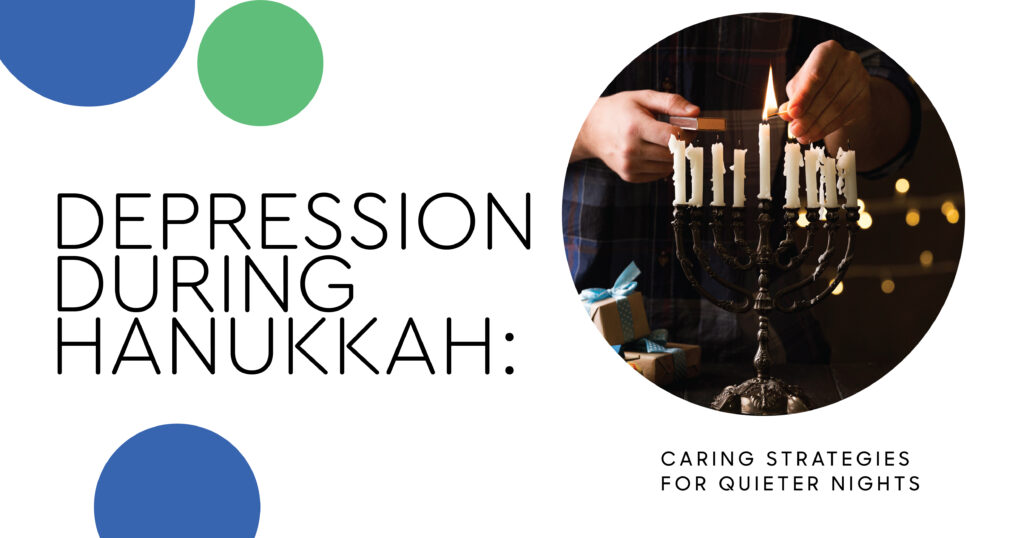
The Festival of Lights arrives each year with expectations of warmth, family connection, and joyful celebration. Yet for many people, depression during Hanukkah transforms what should be a meaningful time into a period of profound struggle. While menorahs illuminate windows and families gather for latkes and songs, you may find yourself unable to access the joy that seems to come so easily to others. If this experience resonates with you, know that your feelings are valid and that gentler ways of moving through this season exist.
Holiday blues: Hanukkah affects countless individuals who feel isolated by the contrast between their internal experience and the celebratory atmosphere surrounding them. The winter timing of Hanukkah coincides with seasonal affective disorder symptoms, shorter days amplify loneliness during Hanukkah, and family gatherings can trigger anxiety rather than comfort. This guide offers caring strategies for navigating the quieter nights of this season while honoring both your emotional needs and your connection to meaningful traditions.
Recognizing Signs and Feelings Tied to Depression During Hanukkah
Depression during Hanukkah often presents differently than it might at other times of the year because the holiday context adds layers of expectation and comparison. You may find yourself going through the motions of lighting candles while feeling emotionally disconnected from the ritual’s meaning. Guilt frequently accompanies holiday depression as you wonder why you cannot simply feel grateful and happy when tradition calls for celebration.

Physical symptoms of depression often intensify during the holiday period. Changes in sleep patterns, appetite fluctuations, persistent fatigue, and difficulty concentrating may worsen as the demands of the season increase. The energy required for shopping, cooking, attending gatherings, and maintaining social connections depletes reserves that depression has already diminished.
| Gathering Challenge | How It Affects You | Protective Strategy |
| Extended family time | Emotional exhaustion, overstimulation | Set time limits, schedule recovery periods |
| Performance pressure | Anxiety, inauthenticity | Identify one ally who knows your truth |
| Difficult relationships | Triggered emotions, old patterns | Plan responses, create exit strategies |
| Intrusive questions | Defensiveness, shame | Prepare brief, neutral answers in advance |
| Comparison to others | Inadequacy, self-criticism | Focus on your own journey and values |
Even positive family relationships require energy during gatherings. The noise, activity, and social demands of Hanukkah celebrations can overwhelm your system when depression has already reduced your capacity. Recognizing that exhaustion following gatherings reflects genuine depletion rather than ingratitude allows you to plan recovery time without self-judgment.
Understanding Seasonal Affective Disorder and Shorter Winter Days
Seasonal affective disorder frequently coincides with Hanukkah, as the holiday falls during the darkest weeks of the year in the Northern Hemisphere. The reduction in daylight hours disrupts circadian rhythms and affects neurotransmitter production in ways that directly cause or worsen depressive symptoms. For many people, what feels like holiday depression actually reflects a biological response to winter light conditions.
Symptoms of seasonal affective disorder overlap significantly with major depression and include persistent low mood, loss of interest in activities, fatigue despite adequate sleep, difficulty concentrating, and changes in appetite often characterized by carbohydrate cravings. Social withdrawal commonly occurs as the effort required for connection feels overwhelming when your brain chemistry is disrupted by reduced light exposure.
Coping with Loneliness During Hanukkah and Grief Around the Holidays
Loneliness during Hanukkah affects people regardless of whether they are physically alone or surrounded by others. Geographic distance from family, estrangement from loved ones, or feeling emotionally disconnected even in crowded rooms all contribute to profound isolation. The emphasis on family gatherings during Jewish holidays heightens awareness of what may be missing in your life and intensifies feelings of not belonging.
Grief and loss at holidays present particular challenges as empty chairs at the table and memories triggered by traditions make absence feel acute. Whether mourning the recent death of a loved one, the end of a relationship, or changes in family structure, Hanukkah can reactivate grief that seemed manageable at other times. The expectation to celebrate while grieving creates painful internal conflict that deserves acknowledgment rather than suppression.
| Loss Type | How Hanukkah Intensifies It | Honoring Your Grief |
| Death of a loved one | Empty chair, changed traditions, triggered memories | Light a candle in their memory, share stories |
| Estrangement | Awareness of missing family, comparison to others | Create chosen family connections, honor your boundaries |
| Relationship ending | Loneliness, changed holiday plans, couple-focused traditions | Develop new personal traditions, seek community |
| Changed circumstances | Loss of home, health, or stability | Acknowledge transition, find small moments of meaning |
| Childhood expectations | The gap between the hoped-for and actual family experience | Grieve the family you wished for, accept what is |
Creating space for grief honors both your loss and your need to heal. Some find comfort in lighting an additional candle in memory of those gone, while others need permission to step away from certain traditions temporarily. There is no single right way to hold grief during Hanukkah, what matters is allowing your authentic experience rather than forcing feelings that do not match your reality.
Coping Strategies for Hanukkah That Honor Both Tradition and Boundaries
Coping strategies for Hanukkah work best when they balance connection to meaningful traditions with protection of your emotional well-being. Rather than abandoning observance entirely or pushing through in ways that deplete you, consider adapting how you participate to match your current capacity. This adaptation honors both your heritage and your humanity.
Setting boundaries represents essential self-care rather than rejection of tradition. You can decline certain gatherings while attending others. You can limit the duration of events you do attend. You can excuse yourself for breaks when overwhelmed. You can choose which traditions to observe fully and which to modify or skip this year. These boundaries protect your ability to remain present for the moments that matter most to you.

Finding Jewish Mental Health Support and Community Resources
Jewish mental health support provides culturally informed care that understands the specific context of depression during Hanukkah. Therapists familiar with Jewish traditions, family dynamics, and religious concerns offer guidance that integrates faith and mental health rather than treating them as separate domains. This integration can be particularly valuable when depression raises spiritual questions or conflicts.
Community resources extend support beyond individual therapy. Jewish Family Services agencies in many communities offer counseling, support groups, and practical assistance. Synagogues increasingly recognize mental health as a community concern and may offer support programs or connections to appropriate resources. Online communities provide a connection for those in areas without local Jewish mental health services.
Reaching out during the holidays takes courage, especially when depression tells you that you are a burden or that no one can help. Challenge these thoughts by recognizing them as symptoms rather than truths. Jewish tradition values pikuach nefesh, the preservation of life, which encompasses mental as well as physical health. Seeking help aligns with rather than contradicts religious values.
Restoring Hope Through Small Acts of Kindness and Connection
Restoring hope during depression often happens through small actions rather than dramatic transformation. Small acts of kindness directed toward others shift focus outward and provide the satisfaction of meaningful contribution even when internal feelings remain low. Sending a message to someone who might also be struggling, making a small charitable donation, or simply offering a genuine compliment all create connections without requiring energy you do not have.
Connection need not be elaborate to be meaningful. A brief phone call with someone who understands, a few minutes of genuine conversation at a gathering, or even parallel presence with another person without pressure to interact all provide the human contact that counters isolation. Quantity matters less than authenticity—one real connection outweighs many superficial interactions.
Self-compassion represents perhaps the most important small act available to you. Speaking to yourself as you would to a struggling friend, acknowledging difficulty without judgment, and allowing imperfect participation in the holiday all demonstrate the kindness you deserve. Depression lies when it tells you that you are failing—the truth is that showing up at all while carrying this weight demonstrates remarkable strength.
Getting Help for Depression During Hanukkah at Mental Health Modesto
Depression during Hanukkah responds to treatment, and seeking professional support can transform your experience of this season and beyond. Whether you struggle with seasonal affective disorder, grief and loss at holidays, family gatherings anxiety, or persistent depression that intensifies during the holidays, evidence-based treatment offers genuine relief. You do not have to endure another difficult season without support.
At Mental Health Modesto, we understand that the holiday season presents unique mental health challenges that require compassionate, informed care. Our team provides therapy, medication management when appropriate, and supportive services that address the specific concerns you bring. We recognize the importance of cultural sensitivity and work with you to develop coping strategies for Hanukkah that honor your traditions while protecting your well-being. Contact Mental Health Modesto today to learn how we can support you through this season and help you find your way back to light and hope.
FAQs
What are some coping strategies for Hanukkah that can help with holiday blues and seasonal affective disorder?
Effective coping strategies include using light therapy with a 10,000 lux box each morning to address seasonal affective disorder, maintaining consistent sleep and wake times, and adapting holiday participation to match your current energy capacity. Setting boundaries around gatherings, simplifying expectations, and building in recovery time between events protects against the depletion that worsens symptoms. Gentle daily rituals like lighting candles mindfully provide a consistent connection to the season without overwhelming demands.
How can individuals manage loneliness during Hanukkah, especially when dealing with grief and loss at holidays?
Managing loneliness involves actively seeking connection through community events, virtual gatherings with distant loved ones, or reaching out to others who may also feel isolated during the holiday. Creating rituals that honor those who are absent, such as lighting a candle in their memory or sharing stories, acknowledges grief while maintaining connection. Giving yourself permission to feel sadness alongside any moments of celebration allows authentic experience rather than forced positivity that deepens isolation.
What Jewish mental health support resources are available for those experiencing family gatherings during Hanukkah?
Jewish Family Services agencies in many communities offer counseling services with therapists who understand Jewish family dynamics and holiday-specific stressors. Synagogues increasingly provide mental health resources, support groups, or referrals to appropriate professionals familiar with religious and cultural contexts. Online communities and telehealth options extend these resources to those without local access to Jewish mental health support.
How do light and hope rituals during Hanukkah contribute to mental well-being and offer a sense of gentle connection?
Light and hope rituals provide consistent daily anchors that ground you in the season without requiring extensive energy, with the simple act of candle lighting creating opportunity for reflection and presence. The Hanukkah narrative of light persisting against odds resonates with the experience of enduring depression and offers meaningful symbolism for personal struggle. Creating personal rituals such as gratitude journaling or dedicating each candle to something meaningful transforms observance into a genuine source of comfort rather than an obligation.
What are some ways to honor tradition while setting personal boundaries during Hanukkah for those struggling with depression?
Honoring tradition while setting boundaries involves choosing which observances to maintain fully and which to modify based on current capacity, recognizing that meaningful participation matters more than exhaustive compliance. Practical approaches include attending some gatherings while declining others, limiting the duration of events, preparing exit strategies, and simplifying food and gift expectations. Communicating boundaries clearly to family members and giving yourself permission to prioritize wellbeing allows a sustainable connection to tradition that supports rather than depletes you.


