 Skip to content






Key Takeaways
- “Stress bumps on fingers” most often refers to dyshidrotic eczema — small, itchy, fluid-filled blisters along the sides of the fingers and palms.
- Stress does not directly cause these bumps, but it is a well-documented trigger that can spark or worsen flare-ups.
- Other common causes include nickel and metal allergies, sweat, humidity, harsh soaps, and repeated friction from work or hobbies.
- Most stress-related finger bumps are not contagious and respond well to moisturizers, topical treatments, and trigger avoidance.
- Because stress is a major trigger, managing anxiety with professional mental health support can be an important part of long-term relief.
You notice tiny, itchy blisters along the sides of your fingers during a stressful week — a looming deadline, a family emergency, or months of running on empty. These “stress bumps on fingers” are a real and surprisingly common phenomenon. While the link between your mind and your skin can feel mysterious, it is well established in medical research. This guide breaks down what causes finger bumps, how to recognize them, and the treatment options that actually help — including why caring for your mental health matters.
What Are Stress Bumps on Fingers?
“Stress bumps on fingers” is an everyday name for the small, raised, often itchy bumps or blisters that show up on the hands during periods of high stress. In most cases, the term describes dyshidrotic eczema (also called pompholyx or palmoplantar eczema), a skin condition marked by tiny, deep-seated, fluid-filled blisters along the sides of the fingers, the palms, and sometimes the soles of the feet.
Doctors do not fully understand what causes dyshidrotic eczema, and stress is only one of several possible triggers. Even so, many people notice their bumps appear or worsen during emotionally demanding stretches — which is why the “stress” label has stuck.
How Stress Manifests as Physical Symptoms on Your Hands
Your skin and nervous system are closely connected. When you are under pressure, your body shifts into “fight-or-flight” mode and releases hormones like cortisol and adrenaline. Over time, producing too much cortisol can drive inflammation throughout the body — including the skin — making sensitive skin more likely to react.
Stress can also make your palms sweat and encourage habits like scratching or rubbing your hands, both of which irritate the skin and can set off a flare. For people already prone to eczema, this creates a frustrating loop: stress worsens the skin, and itchy, visible skin adds even more stress.
Common Causes of Finger Bumps and Hand Irritation
Not every bump on your fingers is stress-related. Several overlapping factors can cause finger bumps and hand irritation, and identifying yours is the first step toward relief.
Stress-Related Skin Conditions That Affect Your Digits
The most common stress-related skin conditions on the hands include:
- Dyshidrotic eczema: itchy, fluid-filled blisters on the sides of the fingers and palms.
- Contact dermatitis: red, inflamed, sometimes bumpy skin caused by irritants or allergens.
- Stress hives (urticaria): raised, itchy welts that can appear anywhere, including the hands, and often flare during anxiety.
These conditions share triggers and can look alike, which is exactly why a professional diagnosis is so helpful.
Environmental and Occupational Factors Behind Hand Stress Bumps
Your surroundings and daily habits play a major role. Common non-stress triggers include contact with nickel, cobalt, or chromium (found in tools, coins, and costume jewelry), frequent hand-washing, harsh soaps and cleaning chemicals, sweaty or wet hands, and hot, humid weather.
Certain jobs raise the risk, too — including healthcare, food service, cleaning, hairdressing, and manufacturing, where hands are often wet or exposed to irritants.
Recognizing Symptoms of Finger Inflammation and Skin Reactions
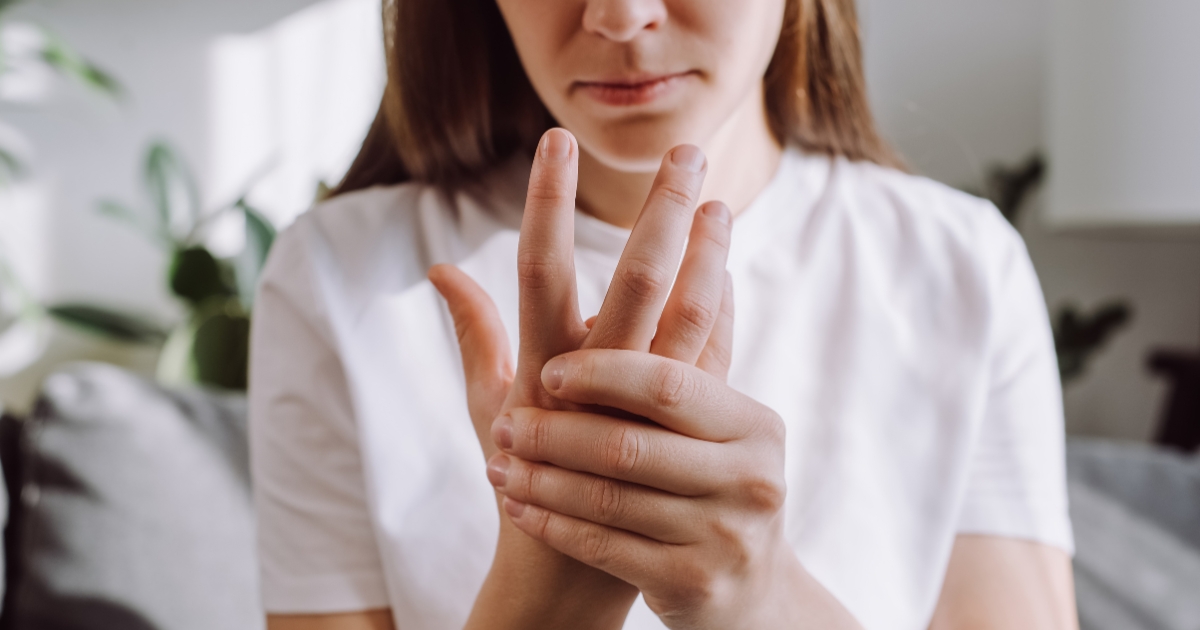
The signs of finger inflammation vary from person to person, but stress-related finger bumps tend to share a recognizable pattern. Watch for:
- Small, clustered blisters along the sides of the fingers (sometimes described as looking like tapioca).
- Intense itching or a burning sensation.
- Redness, swelling, or tenderness.
- Dry, flaking, cracking, or peeling skin as the blisters heal.
In more severe cases, blisters can grow larger, weep fluid, or crack open, which raises the risk of infection. Signs of infection — increasing pain, pus, spreading redness, warmth, or fever — mean you should see a clinician promptly.
Friction Blisters, Calluses, and Repetitive Strain Injury
Not all hand bumps are inflammatory. Repeated pressure and motion create their own set of problems — and stress can play an indirect role when tension leads to gripping, clenching, or overworking your hands.
When Repeated Motions Lead to Hand Problems
Friction blisters form when repeated rubbing separates the layers of skin, creating a fluid-filled pocket — think of a new tool, a fresh gym routine, or hours of handwriting. Calluses are areas of thickened skin that build up to protect against ongoing friction. Both are the body’s response to mechanical stress rather than emotional stress.
Repetitive strain injury (RSI) is related but distinct. It affects muscles, tendons, and nerves rather than the skin’s surface, causing aching, stiffness, tingling, or weakness from repeated movements. If you have pain along with bumps, it is worth having both evaluated.
Contact Dermatitis and Other Allergic Responses on Fingers
Contact dermatitis happens when your skin reacts to something it touches. Irritant contact dermatitis comes from harsh substances like soaps, solvents, or frequent water exposure. Allergic contact dermatitis is an immune reaction to a specific allergen, such as nickel, fragrances, latex, or certain skincare ingredients.
Both can produce red, itchy, bumpy, or blistered skin on the fingers and hands. Because these triggers overlap with dyshidrotic eczema — and stress can make any of them feel worse — allergy (patch) testing is sometimes the best way to pinpoint the real cause.
Treatment Options for Stress-Related Finger Bumps
Most stress-related finger bumps improve with a combination of good skin care, targeted treatment, and trigger management. There is no single cure, but flare-ups are very manageable once you know what to do.
Medical Interventions and Topical Solutions
- Moisturizers and emollients: thick, fragrance-free creams (especially those with ceramides) repair the skin barrier and form the foundation of care.
- Topical corticosteroids: reduce inflammation and itching during active flares.
- Calcineurin inhibitors: non-steroidal prescription creams that are useful for sensitive areas or longer-term use.
- Cool compresses and antihistamines: help ease itching and general discomfort.
- For severe or stubborn cases: a dermatologist may recommend phototherapy, oral medication, or other options.
Lifestyle Changes to Reduce Hand Irritation
- Identify and avoid your triggers, whether that is nickel, certain soaps, or excess moisture.
- Wear gloves for wet work and cleaning, and moisturize immediately afterward.
- Choose gentle, fragrance-free cleansers and pat your hands dry rather than rubbing.
- Keep nails short and resist scratching to lower the risk of infection.
- Build in stress-reduction habits like better sleep and regular relaxation, since stress is a leading trigger.
Managing Stress Bumps Through Mental Health Support at Mental Health Modesto
If your finger bumps tend to flare during anxious or overwhelming stretches, treating the skin alone may only take you so far. Because stress is such a common trigger, learning to manage it can be one of the most effective long-term strategies for calmer, healthier skin.
At Mental Health Modesto, our team helps people build practical tools for managing stress, anxiety, and the everyday pressures that can show up in the body — including on your skin. Evidence-based approaches like cognitive behavioral therapy, relaxation training, and mindfulness can lower your overall stress load and help break the stress-flare cycle.
If stress is taking a toll on your mind and your body, you do not have to manage it alone. Contact Mental Health Modesto to learn how professional support can help you feel more in control — and give your skin the chance to heal.

FAQs
-
Can stress hives appear specifically on fingers and hands rather than other body areas?
Yes. Stress hives (a form of urticaria) can appear anywhere on the body, including the fingers, palms, and backs of the hands. They show up as raised, itchy welts that may come and go quickly. While hives often spread across larger areas, some people notice them mainly on the hands, especially during periods of acute stress.
-
How do repetitive strain injuries differ from stress-related skin conditions on your hands?
Repetitive strain injuries affect the deeper structures of the hand — muscles, tendons, and nerves — and cause symptoms like aching, stiffness, tingling, or weakness from repeated motions. Stress-related skin conditions, such as dyshidrotic eczema, affect the surface of the skin and cause visible bumps, blisters, and itching. One is mechanical; the other is inflammatory, although emotional stress can play a role in both.
-
What distinguishes friction blisters caused by stress from calluses on fingers?
Friction blisters form quickly when repeated rubbing separates the skin’s layers, creating a tender, fluid-filled pocket that can pop. Calluses are the opposite kind of response: the skin thickens gradually to protect against ongoing pressure, so they tend to be firm and painless. In short, a blister is a short-term reaction and a callus is a long-term adaptation.
-
Are stress bumps on fingers contagious or do they spread to other people?
No. Dyshidrotic eczema and other stress-related finger bumps are not contagious — you cannot catch them from, or pass them to, another person. They can, however, spread across your own hands or feet during a flare. Keeping the skin moisturized and avoiding known triggers helps limit how far a flare-up travels.
-
How quickly do hand stress bumps typically respond to topical treatments and lifestyle changes?
Many people see improvement within a few weeks of consistent care. Individual blisters from dyshidrotic eczema often clear over roughly three weeks, and topical treatments plus trigger avoidance can speed relief. Because triggers like stress can bring the bumps back, ongoing prevention — including stress management — matters just as much as treating an active flare.
This article is for general educational purposes and is not a substitute for professional medical advice. If your symptoms are severe, spreading, or show signs of infection, contact a healthcare provider.
References
1. National Eczema Association — Dyshidrotic Eczema: Symptoms, Causes & Treatment. https://nationaleczema.org/types-of-eczema/dyshidrotic-eczema/
2. American Academy of Dermatology — Dyshidrotic eczema: Overview. https://www.aad.org/public/diseases/eczema/types/dyshidrotic-eczema
3. Medical News Today — What to know about dyshidrotic eczema (summer finger bumps). https://www.medicalnewstoday.com/articles/summer-finger-bumps
4. Calle Sarmiento PM, Chango Azanza JJ. Dyshidrotic Eczema: A Common Cause of Palmar Dermatitis. Cureus (NCBI). https://www.ncbi.nlm.nih.gov/pmc/articles/PMC7647841/


